Table Of Content
- Spider magic: silk, spinnerets, webs and curious oddities
- Frontiers in Mechanical Engineering
- Explore Endless Possibilities with USA Hair Premium and Affordable Hair Extensions, Toppers, and Wigs
- Unlock the Secrets to Flawless Hair: Expert Tutorials on Extensions, Wigs, and Toppers
- Engineers impressed by the functional great diversity of hairs on spider legs.
- Smart Savings on Hair Extensions, Wigs, and Toppers: Your Guide to Affordable Luxury
- More Stories from Science News Explores on Animals
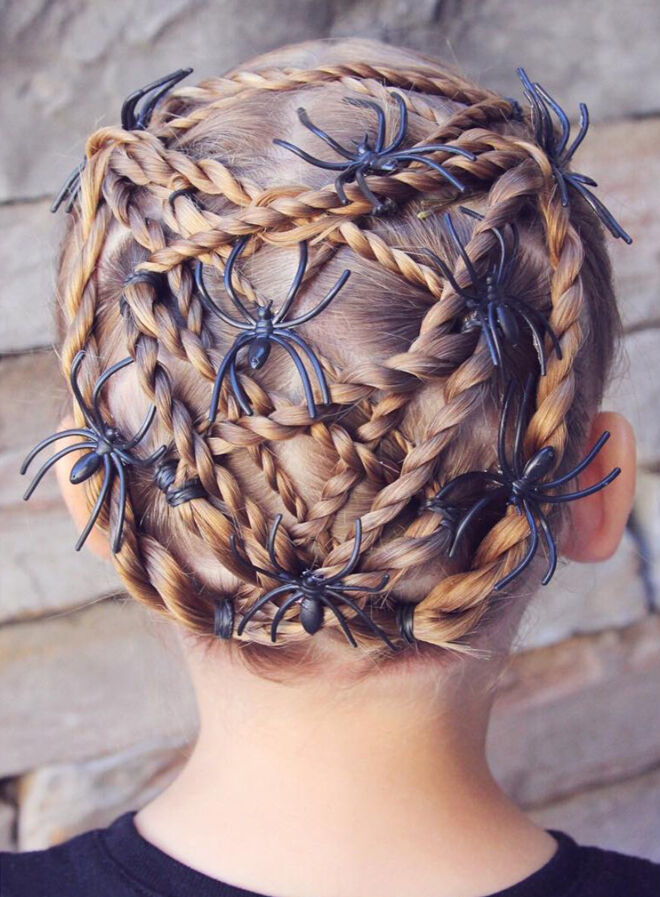
By uploading a picture, you are giving us permission to use the picture on this site. Do not upload pictures taken from other web sources without proper crediting. Any pictures we use, we will place your name and city where it was found beneath the picture as the photographer. Spiders are in the class Arachnida (a word derived from the Greek arakhne, meaning spider), which also includes mites, ticks, harvestmen, and scorpions. There are at least 48,200 species in the world, inhabiting every continent except Antarctica, and nearly every kind of terrestrial habitat.
Spider magic: silk, spinnerets, webs and curious oddities
They also provide the input stage for a spider’s sense of touch. As will be shown spider tactile hairs are surprisingly well “designed” to serve their particular sensory purposes. The most sensitive hairs, called trichobothria, detect even the smallest changes in air movement because of their "ball and socket" attachment to the membrane in the cuticle.
Frontiers in Mechanical Engineering
This allows them to detect prey or threats to them in total darkness. Spiders like tarantulas, huntsman and jumping spiders have densely packed hairs called scopulae on their feet (tarsal and metatarsal leg segments). Scopulae give the legs lots of clinging power and allow the spiders to walk easily on smooth surfaces like tree trunks, leaves, ceilings and window glass. They also help these spiders to hold on to struggling prey. This implies a considerable scaling down of the hair tip movement and a corresponding scaling up of the force close to the dendrites. When the hair is deflected by 10°, which is close to the maximum deflection under biological conditions, the torque counteracting the stimulus measures ca.
Explore Endless Possibilities with USA Hair Premium and Affordable Hair Extensions, Toppers, and Wigs
That they picked up such a wide range of frequencies at all could overturn previous assumptions about how trichobothria work. Urticating hairs are not just thrown at an enemy as a first line defense, but are also used as an indication of territory. They can be found on and around the burrow entrance and in webbing for protection (for example, some subfamily Theraphosinae species include these bristles in cocoon silk). Each type of urticating hair is believed to target different enemies. Please upload the picture as its own file to the comment form below. Our upload form allows all standard image files up to a size of 15 MB.
Unlock the Secrets to Flawless Hair: Expert Tutorials on Extensions, Wigs, and Toppers

Chitin is a polysaccharide that produces a tough material called cuticle. Underlying the cuticle is a layer of epithelial cells containing granules of pigment, which give spiders their colors. The spider’s four pairs of legs are attached to the prosoma. Urticating hairs do not appear at birth but form with each consecutive molt, widening from molt to molt and outwardly presenting themselves around areas of more dark bristles on the upper back part of the abdomen of juveniles. In elder ages their coloration shifts to match the main tone of abdomen.
Engineers impressed by the functional great diversity of hairs on spider legs.
Surrounded by blood, the book lung is thin, hollow and has plates stacked like pages in a book. Connected to it is a slit-like opening in the spider’s underside, where oxygen enters, and carbon dioxide exits. Others, such as orb-weavers and wolf spiders, have one book lung and trachea. To measure the hairs' wiggling velocities, Bathellier and his colleagues placed hunting spiders and crickets in a sealed glass box with a speaker mounted to it. Then they painted a laser sheet down the box and across a specimen's trichobothria, then puffed microscopic drops of oil that lit up in the plane of the laser. How their tiny specialized hairs do it has puzzled researchers for decades, but one team of scientists may have found a break.
Many animals climb, but few do it as well as the spider. These eight-legged critters scale walls and skitter on ceilings, clinging in seemingly impossible ways. Now researchers have turned up surprising clues as to how spiders can stick to almost any surface. The structure of tiny hairs at the tip of the spider’s legs likely help the creature hang on.
Smart Savings on Hair Extensions, Wigs, and Toppers: Your Guide to Affordable Luxury
“When Did He Last Wash His Hair?”: Netizen Films Spider Spinning Web On Head Of Man At Angela Chang Concert - 8 Days
“When Did He Last Wash His Hair?”: Netizen Films Spider Spinning Web On Head Of Man At Angela Chang Concert.
Posted: Tue, 06 Jun 2023 07:00:00 GMT [source]
Many glochidia are barbed, complicating their removal and enhancing their persistence in the skin. Exposure to glochidia is an occupational hazard to fruit pickers and other outside workers in areas where Opuntioideae thrive, as the spines can persist in clothing and gloves and can become airborne under the right conditions. At USAHair, we’re more than a brand; we're your partner in finding the perfect hair solutions.
More Stories from Science News Explores on Animals
The feet of this species of spider are made up of close to 2,400 tiny hairs or ‘setae’ (one hundredth of one millimeter thick). Schaber, and his colleagues Bastian Poerschke and Stanislav Gorb, collected a sample of these hairs and then measured how well they stuck to a range of rough and smooth surfaces, including glass. They also looked at how well the hairs performed at various contact angles. Just how do spiders walk straight up — and even upside-down across — so many different types of surfaces? Now, a new study in Frontiers in Mechanical Engineering is the first to show that the characteristics of the hair-like structures that form the adhesive feet of one species — the wandering spider Cupiennius salei — are more variable than previously thought. The feet of this species of spider are made up of close to 2,400 tiny hairs or 'setae' (one hundredth of one millimeter thick).
Quality, honesty, and customer satisfaction are our foundation. Join the USA Hair ™ community and discover the difference for yourself. We don’t cut corners on our products' standards, and we don’t believe in overpricing for quality. Order today and take advantage of free shipping across the United States and Canada! We have distribution centers strategically located across North America, ensuring fast and reliable delivery throughout the US and the Great White North. All orders are shipped via USPS, ensuring they are delivered fast and without hidden fees.
When people are hit by urticating hairs, they can cause redness, stinging and itching —and even blindness if they strike the eyes. The chemically sensitive hairs used for smell and taste are blunt and hollow. They also play a role in reproduction and help the tarantula look for a mate.
For example (in reptiles), the coral snakes (family Elapidae) are well-known as venomous, while the non-venomous milk snakes (Colubridae) appear visually very similar, utilizing mimicry to their advantage. Be mindful of weather elements, but we'll guide you on how to make the most of them. Consider the upkeep cost and styling time as part of your beauty investment. Navigating through countless online stores can be daunting. We efficiently dispatch orders from our warehouses located in North America, ensuring quick and dependable service. For those with medium to very thick hair, USA Hair's sewn-in extensions, also known as wefts or weaves, are an exceptional option.

Spines are often more numerous and larger on the front legs. They assist in capturing and holding prey or in helping males hold females during mating. Air vibrations and currents are detected by slender, vertical hairs called trichobothria, usually found on the upper surface of the three outermost limb segments. These hairs are easily deflected and their 'ball and socket' basal hinge allows them to respond to air movements coming from any direction.
Then the spider feeds by sucking the partially digested fluids out. Other spiders with more powerfully built chelicerae masticate the entire body of their prey and leave behind only a relatively small amount of indigestible materials. Web weaving spiders that have made a shroud of silk to quiet their envenomed prey's death struggles will generally leave them in these shrouds and then consume them at their leisure. Spiders typically have eight walking legs (insects have six). They do not have antennae; the pair of appendages in front of the legs are the pedipalps (or just palps). Starting from the body end, these are the coxa, trochanter, femur, patella, tibia, metatarsus and tarsus.
Hairs are also the medium through which spiders taste and smell—they’re connected to sensory organs that detect the chemical composition of what they touch. “Hmm, is that a tasty moth or the gorgeous spider of my dreams? ” Spiders don’t take action unless they detect prey or a mate. Experts think they may also use hairs on their pedipalps to taste prey. Most spiders have strong, thick modified hairs called spines on the limbs.


No comments:
Post a Comment